/>

Friday, February 28, 2014

The Stuart Hall Project

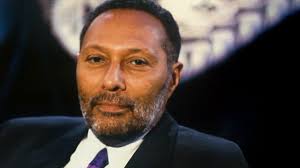
Newly available in the Annenberg Library is the much anticipated John Akomfrah film, The Stuart Hall Project. This film, about one of the founding figures of cultural studies, received a lot of buzz at this year's Sundance and Sheffield Documentary festivals.

"Stuart Hall, one of the most preeminent intellectuals on the Left in Britain, updates this definition as he eloquently theorizes that cultural identity is fluid—always morphing and stretching toward possibility but also constantly experiencing nostalgia for a past that can never be revisited. Filmmaker John Akomfrah uses the rich and complex mood created by Miles Davis’s trumpet to root a masterful tapestry of newly filmed material, archival imagery, excerpts from television programs, home movies, and family photographs to create this lyrical and emotionally powerful portrait of the life and philosophy of this influential theorist. Like a fine scotch, The Stuart Hall Project is smooth, complicated, and euphorically pleasing. It taps into a singular intelligence to extract the tools we need to make sense of our lives in the modern world."
--Sundance Film website

You can view the trailer here.

Labels: , , ,

Friday, February 10, 2012

Assignment: China -- USCI series on American reporting on China

US-China Today, a non-profit student-driven magazine of the USC US-China Institute focusing on the multidimensional and evolving US-China relationship and on significant trends in contemporary China, features a special documentary project on American reporting in China called Assignment China.

Interviews with [the] journalists who covered China are the core of Assignment: China which is illustrated by archival news footage and other images... In addition to interviews with those whose work was featured on American front pages and broadcasts, the series includes interviews with Chinese and American officials who sought to manage coverage of China or of specific events, such as Nixon’s historic 1972 trip.

Mike Chinoy, the distinguished former CNN Asia correspondent and USC U.S.-China Institute Senior Fellow, is the writer and reporter for the series. He is assisted by  USCI staff and students.
Assignment: China has recently published two short documentaries – “The Week That Changed The World” and "Opening Up."
 
The Week that Changed the World – President Richard Nixon’s 1972 trip ended more than two decades of Cold War hostility. American and Chinese forces had fought each other in Korea and the United States had refused to formally recognize Beijing’s government and did recognize Taipei’s. From the founding of the People’s Republic until the Nixon trip, American news organizations had virtually no access to the world’s largest and most rapidly changing country. America’s most famous journalists clamored to go with the president, though most had no idea what they might find, telling us “it was like going to the moon.”
USCI website | Chinese subtitled version 中文字幕版
USCI YouTube Channel | Chinese subtitled YouTube version 中文字幕版


Opening Up – With the restoration of U.S.-China diplomatic relations in 1979, American news organizations were finally able to base reporters in China, something that even the Nixon trip hadn’t made possible. By this time, of course, China was embarking on stunning economic and social reforms. Private enterprise was being permitted, foreign investment pursued, and controlling births was made a government priority. There were also stirrings of dissent, which the party-state moved to stifle. Though influential, the reporting corps was small. Delighted to be covering such sweeping changes, reporters sometimes chafed at the restrictions imposed on them by the Chinese government and their own editors and by the technological challenges of reporting from a developing country.
USCI website | Chinese subtitled version 中文字幕版
USCI YouTube Channel | Chinese subtitled YouTube version 中文字幕版

Labels: , ,

Tuesday, July 27, 2010

Code of Best Practices in Fair Use for Scholarly Research in Communication

The International Communication Association's Code of Best Practices in Fair Use for Scholarly Research in Communication, which is posted at the American University's Center for Social Media site (as well as it's own), identifies four situations that represent the current consensus within the community of communication scholars about acceptable practices for the fair use of copyrighted materials." The Center for Social Media is the place to go for fair use issues in education and media production. You can view videos on codes for best fair use practice in user-generated video, documentary film making, media literacy, and remix culture.

On the same front, just yesterday the Librarian of Congress announced the latest ruling on exemptions to the Digital Millennium Copyright Act, expanding fair use practice to include encrypted copyrighted works. Teachers, students and filmmakers can now break encryption to quote limited portions of copyrighted works into their own work or teaching.

Labels: , , ,

Monday, September 10, 2007

Documentaries on International Journalism

Take a study break (already!) with these award winning documentaries, available at the Annenberg Library.

A Tribe of His Own (directed by Joe Moulins, 2002). A little film about an Indian reporter delivers insights on human suffering and inextinguishable hope.

Talk Mogadishu: Media Under Fire (directed by Judy Jackson, 2003). The story of HornAfrik, the first community TV and radio station in Somalia.

The Man We Called Juan Carlos (2000) The story of a Mayan peasant who affected the lives of Canadian filmmakers for over 25 years as they recorded his life.

Independent Intervention: Breaking the Silence (directed by Tonje Hessen Schei and David Bee, 2006). United States media coverage of the war in Iraq, investigating how the systems and institutions that govern information flow in times of political turmoil.

Thirty Frames a Second: The WTO in Seattle, A Photojournalist's Personal Odyssey (directed by Rustin Thompson, 2000). An impressionistic film journal that witnesses the tumultuous World Trade Organization 1999 convention in Seattle.

Democracy on Deadline (directed by Calvin Skaggs, 2006). A sweeping look at how journalists work in different media, in different languages, in different parts of the world.

Tell the Truth and Run: George Seldes and the American Press (directed by Rick Goldsmith, 1996. 2006). Academy Award nominated documentary on legendary journalist George Seldes.

Labels: ,

Web Analytics